
Understanding Glaucoma
April 9, 2021
October 9th is World Sight Day: Understanding Glaucoma & Preventing Vision Loss
October 1, 2025
Healthy Aging & Vision: How to Protect Your Eyes After 50 in Chicago
As we age, our eyes undergo natural changes — but many age-related eye conditions are very treatable when caught early. Healthy Aging Month is the perfect time for Chicago patients to learn how to maintain sharp, comfortable vision throughout their 50s, 60s, 70s, and beyond.
At Chicago Glaucoma Consultants, our specialists diagnose and treat glaucoma, cataracts, dry eye, and other common age-related conditions every day. Here’s what to know in 2026.
How Vision Changes With Age
Not all vision changes are signs of disease. Some are expected:
✔ Presbyopia
Difficulty focusing on near objects.
(Usually requires reading glasses or multifocal lenses.)
✔ Reduced tear production
Common in older adults — a major source of dry eye.
✔ Changes in color perception
Colors may appear more muted or yellowish as the lens ages.
However, some changes are NOT normal — and require medical evaluation.
Age-Related Conditions to Watch For
-
Cataracts
A clouding of the natural lens — nearly universal after age 60.
Symptoms include glare, halos, and blurred vision.
-
Glaucoma
Often silent, but can permanently damage the optic nerve if untreated.
-
Age-Related Macular Degeneration (AMD)
Affects central vision needed for reading or recognizing faces.
-
Dry Eye Disease
Very common as oil glands in the eyelids become less functional.
If you notice changes in clarity, contrast, or night driving — schedule an exam.
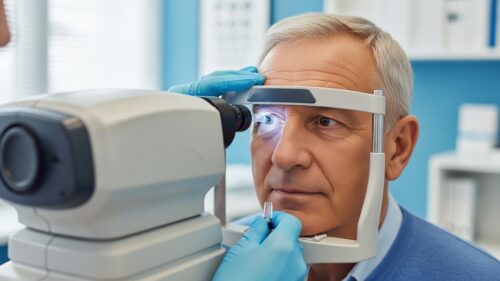
How to Protect Your Vision as You Age
- Schedule annual eye exams (more often if at risk)
- Control blood pressure and blood sugar
- Wear sunglasses with UV protection
- Use lubricating artificial tears if needed
- Avoid smoking
- Take breaks during screen use
Prevention is always easier than treatment.
When to See a Glaucoma Specialist
If you have:
- Family history of glaucoma
- Diabetes
- High eye pressure
- Difficulty with night driving
- Increasing glare or halos
A comprehensive evaluation can help detect issues before symptoms appear.
FAQ
- Is vision loss a normal part of aging?
No — many causes of vision loss are treatable or preventable. - When should older adults be screened for glaucoma?
At least once a year after age 50. - Can cataracts be reversed without surgery?
No — but cataract surgery is safe, fast, and highly effective.